San Jose's Feast-or-Famine Rain Season
Personal observations on San Jose's recent storms and the dry spell that came before them
If you live in San Jose, you probably noticed something strange about this winter. For over five weeks starting in early January, we barely saw a single drop of rain. The skies were clear, temperatures felt more like spring than winter, and it almost seemed like the rainy season had forgotten about us. Then, almost overnight, the storms returned. This past week, back-to-back storm systems have been soaking the Bay Area, bringing heavy rain, flooding on local roads, and even thunderstorms. As someone who has grown up here and pays attention to the environment, this pattern caught my attention.
Why This Pattern Matters for the Environment
This feast-or-famine cycle — long dry periods followed by sudden heavy rain — is a growing concern for our local environment. When the ground is dry and hard after weeks without rain, it does not absorb water as easily. And when heavy rain starts falling right after, rainwater runs off quickly, which has the potential of carrying pollutants like oil, trash, and fertilizers into our creeks and eventually into the San Francisco Bay. The sudden rush of water can also cause erosion along stream banks and hillsides.
The dry spell also affected the Sierra Nevada snowpack, which is one of California's most important water sources. By early February, the snowpack had dropped well below normal levels because warm, clear conditions caused mid-winter snowmelt. The Northern Sierra snowpack was reported at only about 43% of normal. Even though these recent storms will help, they may not be enough to fully make up for what was lost during the dry weeks.
Additionally, long dry periods during winter can stress local plants and wildlife that depend on consistent moisture. Creek habitats dry up, and the soil loses the moisture that native plants need to stay healthy during what should be their growing season.
What I Observed
Walking around my neighborhood after the first storm hit, I noticed how fast the water was moving through the gutters and storm drains. Puddles formed quickly on sidewalks and in parking lots, and some low-lying streets had standing water. Although this is normal for any rain season, it was the quantity and speed at which these bodies of water were forming that was unusual. It was a clear reminder that our urban environment is not designed to handle sudden large amounts of rain, especially after a long dry period when the ground is compacted.
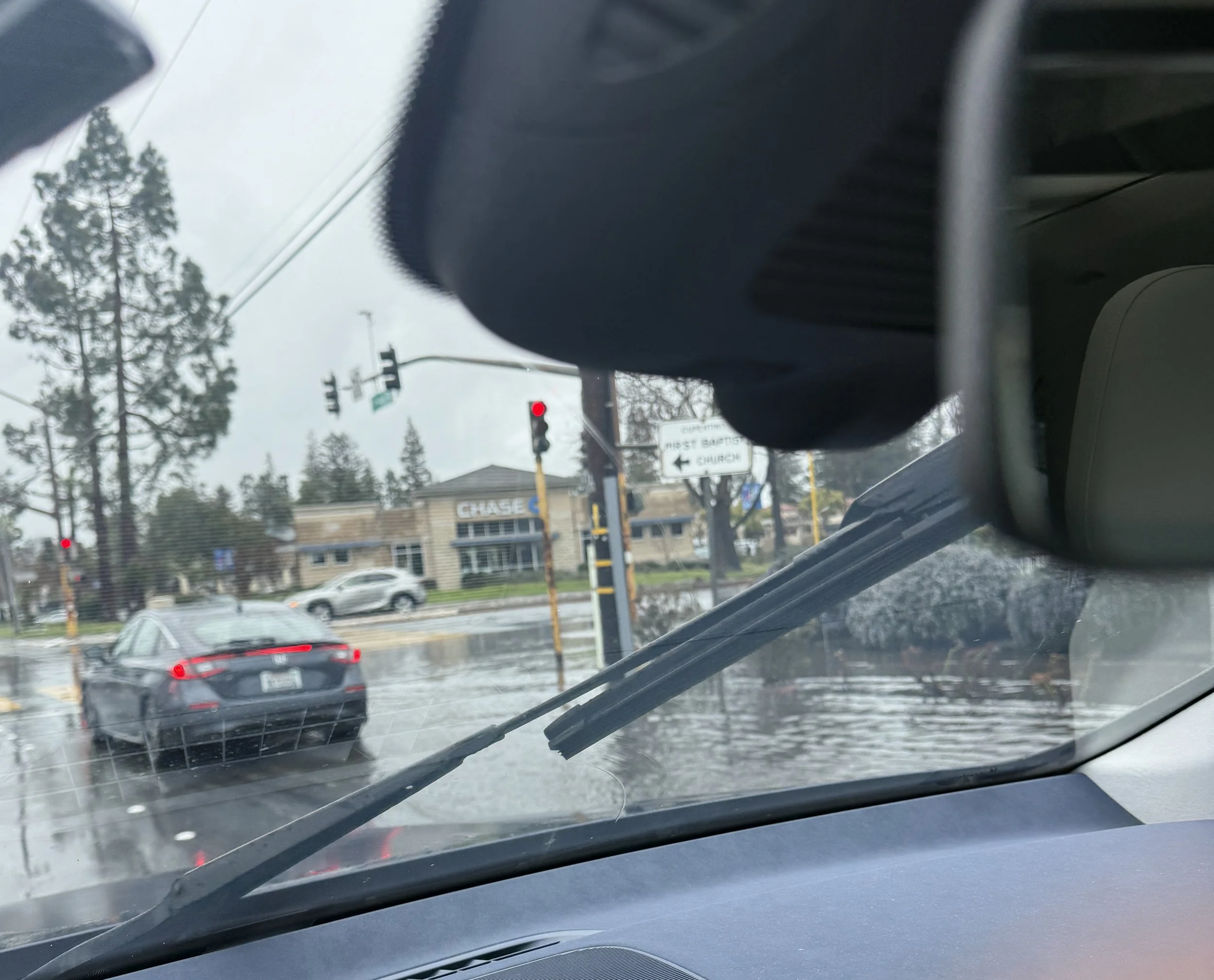
Flooding on a local San Jose road during the recent February storms. Water pools across the intersection as cars navigate through the rain.
I also noticed that the creek near my house, which had been barely trickling for weeks, suddenly had muddy, fast-moving water. The contrast was dramatic and a little unsettling.
Conclusion
This winter's weather pattern in San Jose — weeks of dry, warm weather followed by a burst of heavy storms — is a reminder of how connected weather, water, and the environment really are. It is not just about whether we get enough rain overall. When and how that rain falls matters too. Sudden heavy rain after a long dry spell can cause more harm than steady, moderate rain spread throughout the season. As the climate continues to change, understanding these patterns and their effects on our local environment becomes even more important.
